Over 30 Years of History
The World’s Largest Soup Festivals
Experience a 30,000-Person Imoni Gathering Cooked in a Giant Pot with a Backhoe
Event Overview
-
1Date September 20 (Sunday), 2026
-
2Location Mamigasaki River Riverside
-
3Schedule 8:30 AM – Tickets distributed
9:20 AM – Serving begins
Since its first event in 1989, this festival has built a history of more than 30 years and draws large
crowds from across Japan every
year.
The festival stands as one of Japan’s leading events and a true symbol of autumn in Yamagata.
Astonishing Cooking with Heavy Machinery
An Extraordinary Scale
30,000 Servings
at Once?
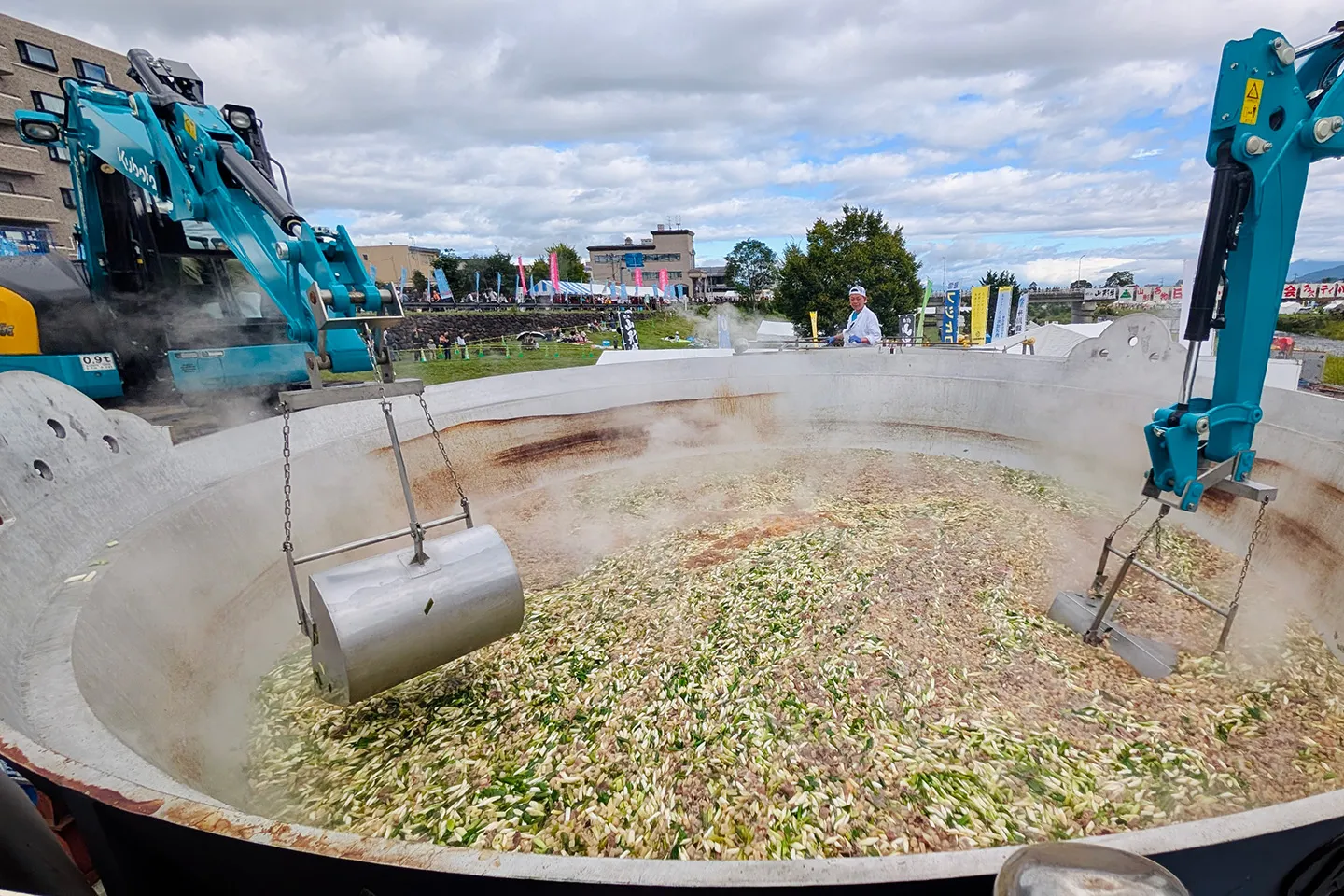
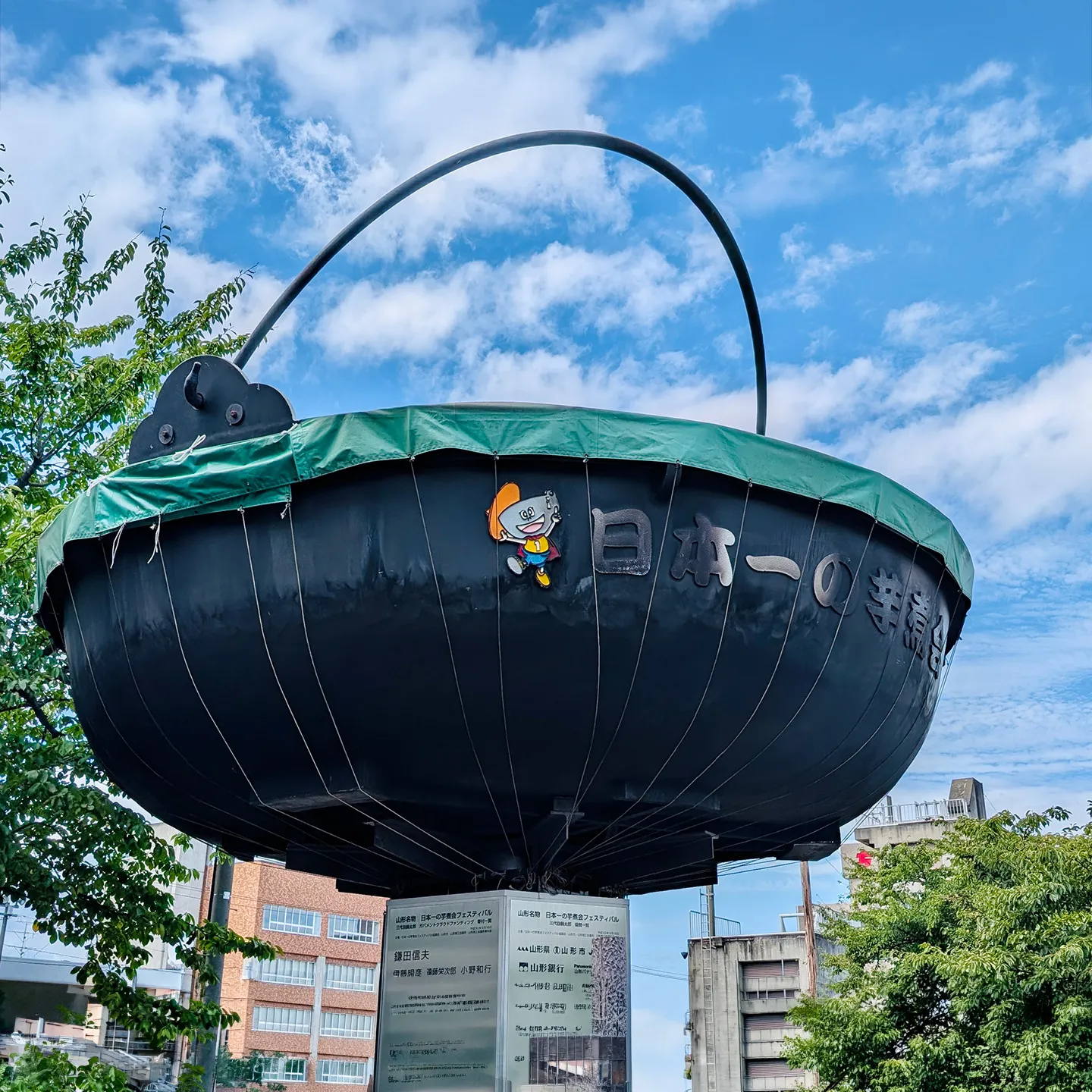
To serve 30,000 portions at once, every aspect of the cooking is on an extraordinary scale. At the center stands “Nabetaro,” a giant 6.5-meter-diameter pot crafted using Yamagata cast-iron techniques.
The biggest highlight is the sight of a construction-site backhoe operating as a massive ladle. With overwhelming power, the backhoe stirs and scoops up to 100 servings at a time in one bold motion.
Secrets Behind the Scale
Carefully Selected Ingredients
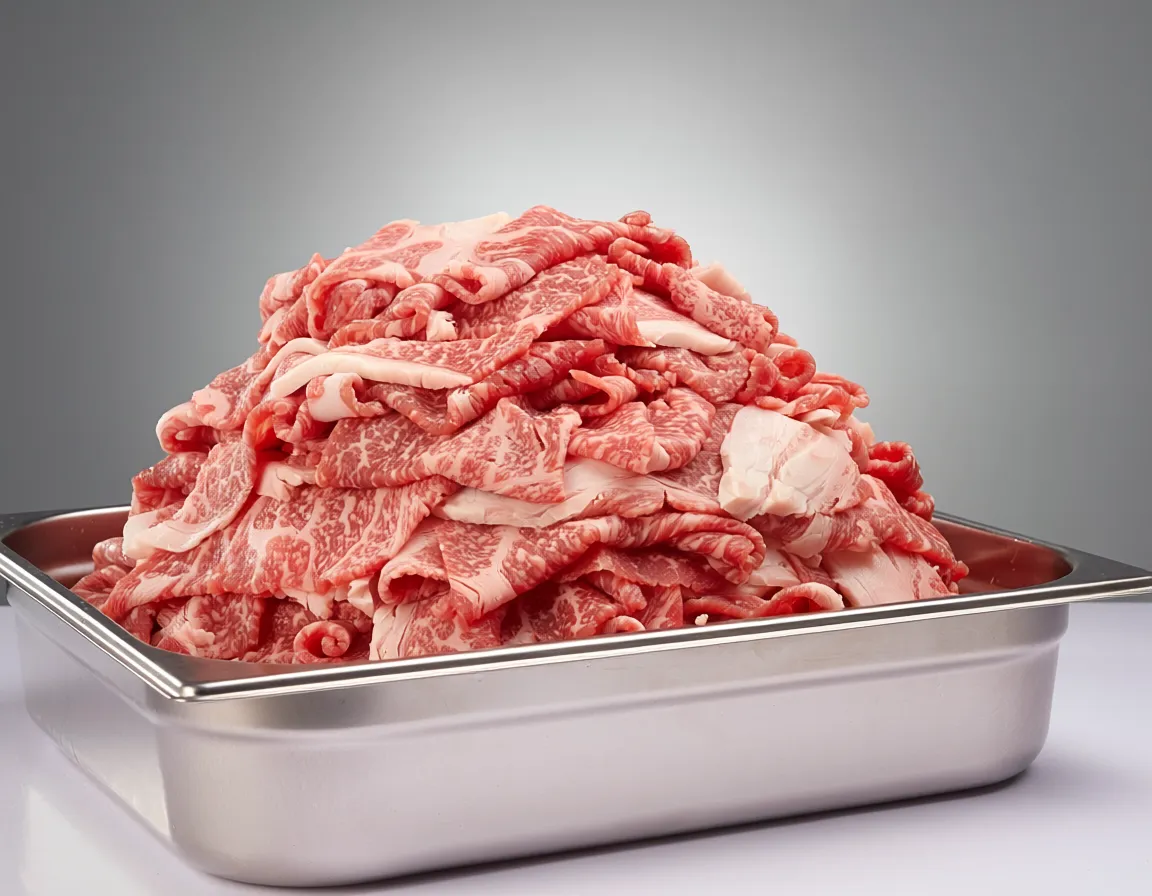
Every ingredient is locally sourced from Yamagata Prefecture to guarantee the highest quality. We use 1.2 tons of premium Yamagata Beef, known for its rich marbling and melt-in-your-mouth texture.
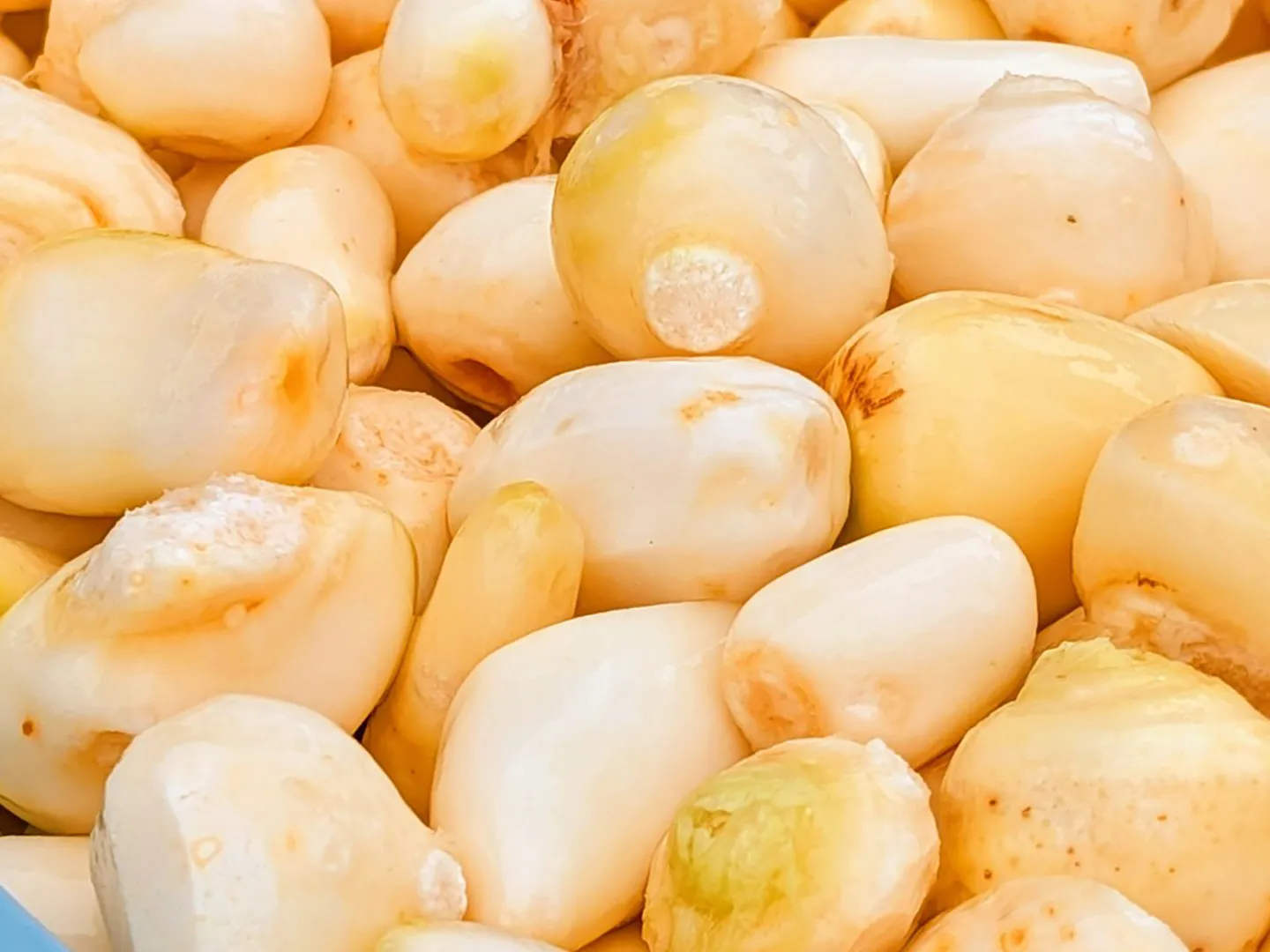
This is simmered perfectly with 3 tons of local taro potatoes, carefully harvested to retain their natural sweetness, alongside 3,500 fresh green onions to create a deeply flavorful broth.
The Cleanest Heavy Machinery
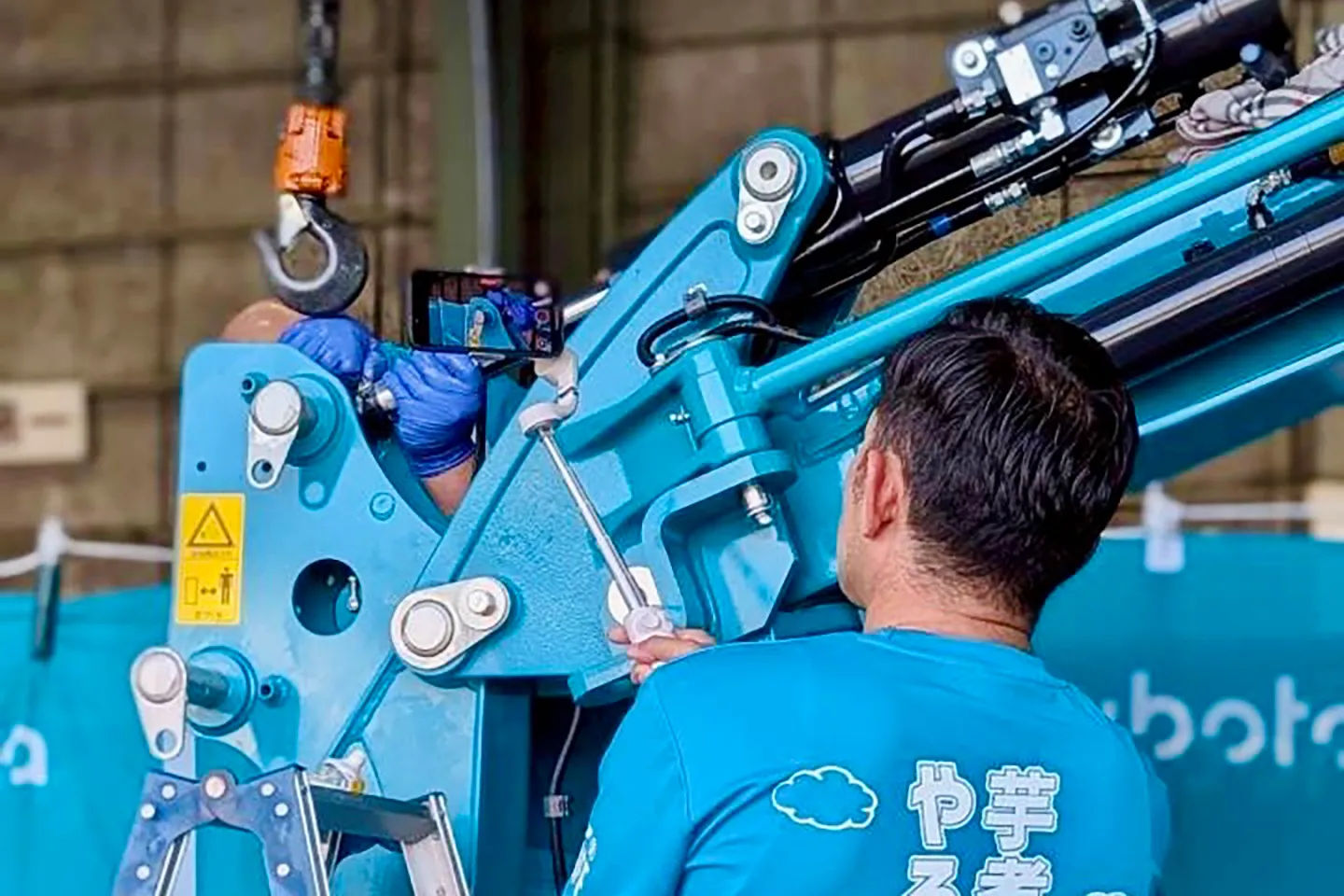
How do we safely cook with a construction backhoe? We start with a brand-new machine. It is completely disassembled by professionals to remove every drop of industrial grease.
In its place, food-grade butter is meticulously applied by hand to all moving parts. Finally, equipped with a custom-made stainless-steel bucket, the backhoe is transformed into the world’s most dynamic cooking utensil.
Thorough Hygiene Control
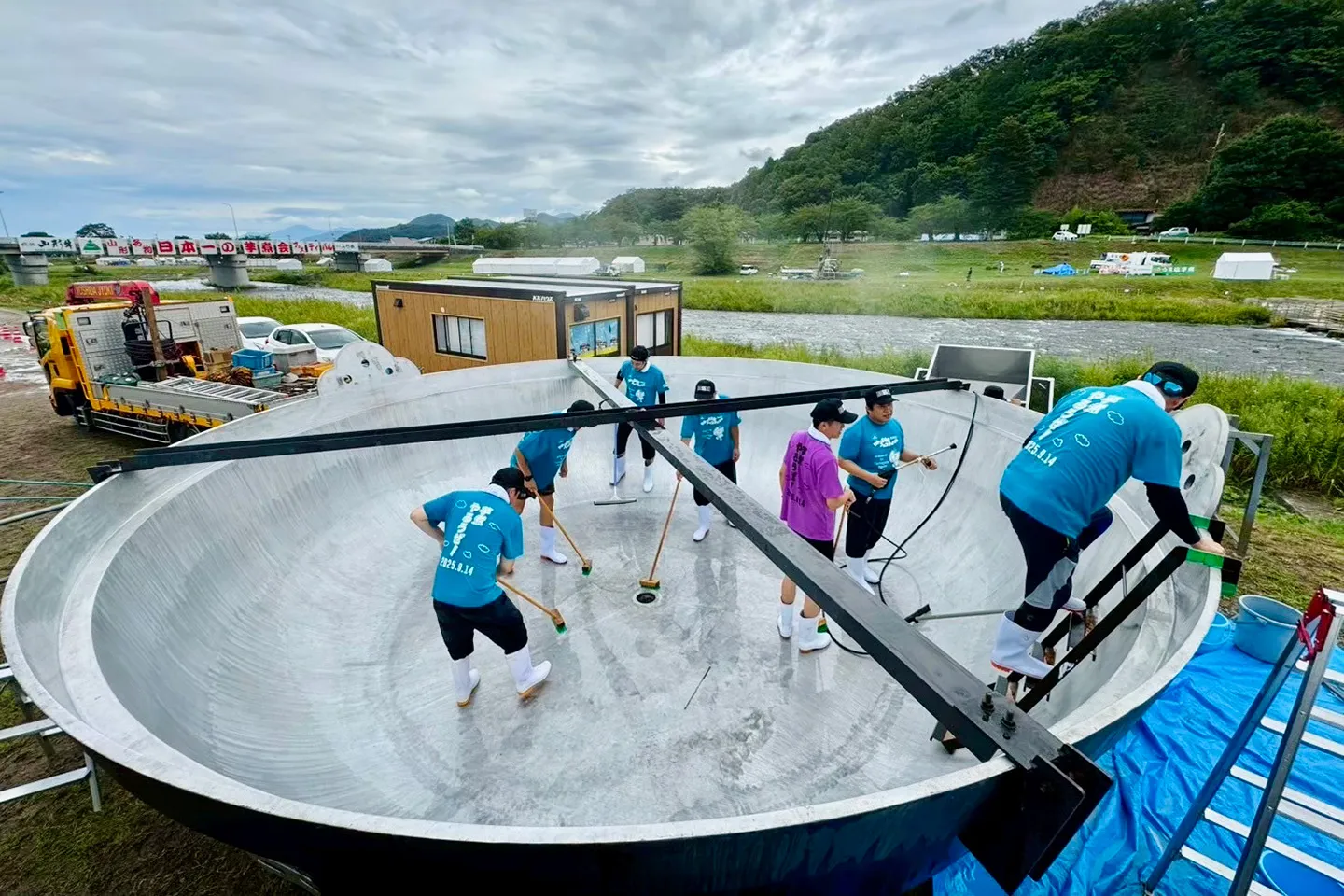
Cooking for 30,000 people requires uncompromising hygiene. Before the event, a dedicated team of workers steps inside the giant 6.5-meter pot.
Using heavy-duty deck brushes and industrial high-pressure washers, they scrub every inch of the iron surface. To ensure absolute cleanliness, the entire procedure is repeated twice.
The History of the
Giant Pot
Since the first event in 1989, “Nabetaro” has supported the festival every year. The current third-generation pot measures 6.5 meters in diameter and weighs 4 tons.
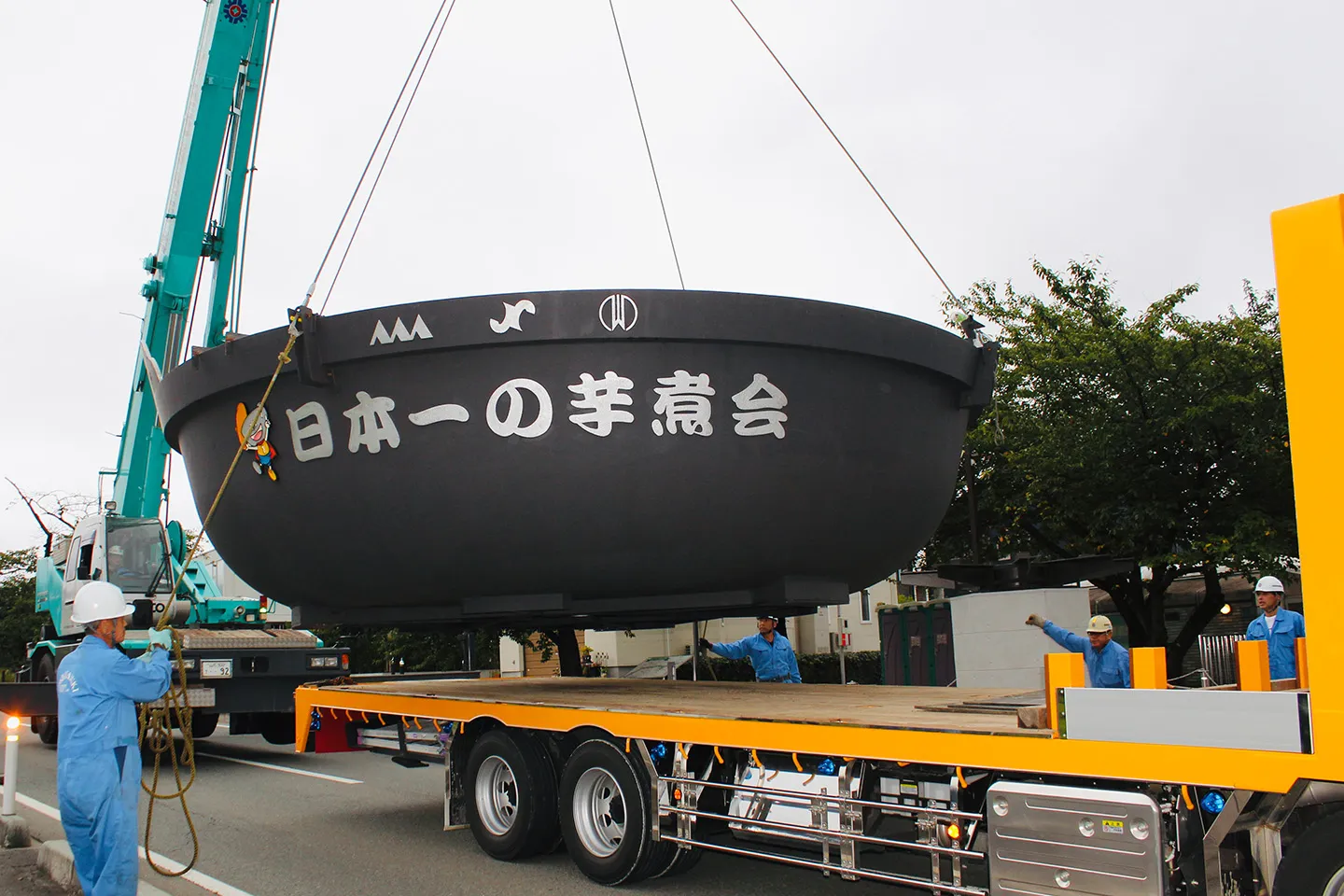
From transport and installation to cooking and removal, every stage requires the use of a 10-ton crane truck, making the entire operation a large-scale undertaking.
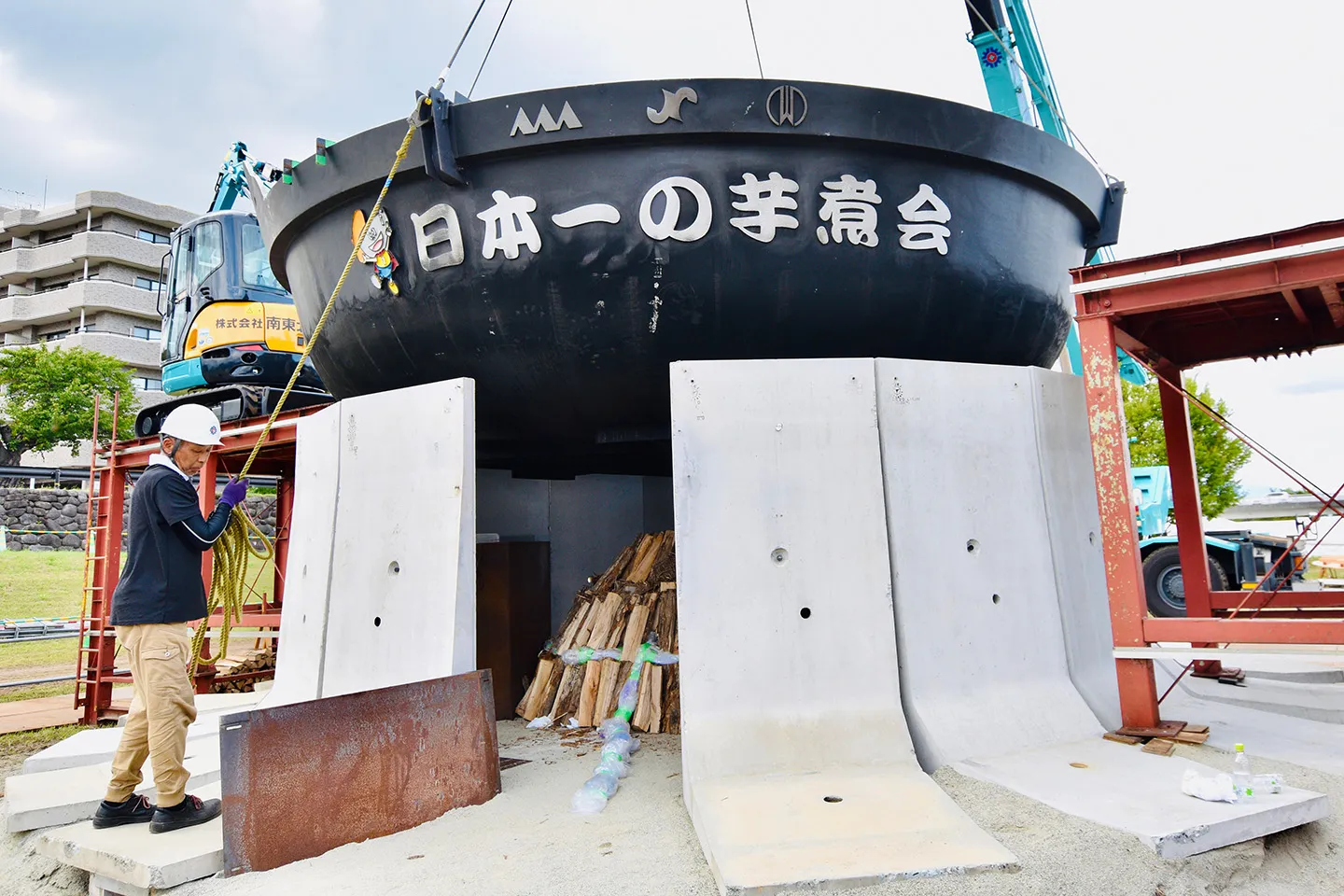
The pot is supported and heated by a massive stove constructed from large L-shaped concrete channels typically used in construction. Inside the stove, 6 tons of firewood are burned. Every element of the process is on an extraordinary scale.
The Process
Moving the Giant Pot
The 6.5-meter “Nabetaro” is carefully transported and placed on its massive custom stone hearth by heavy machinery.
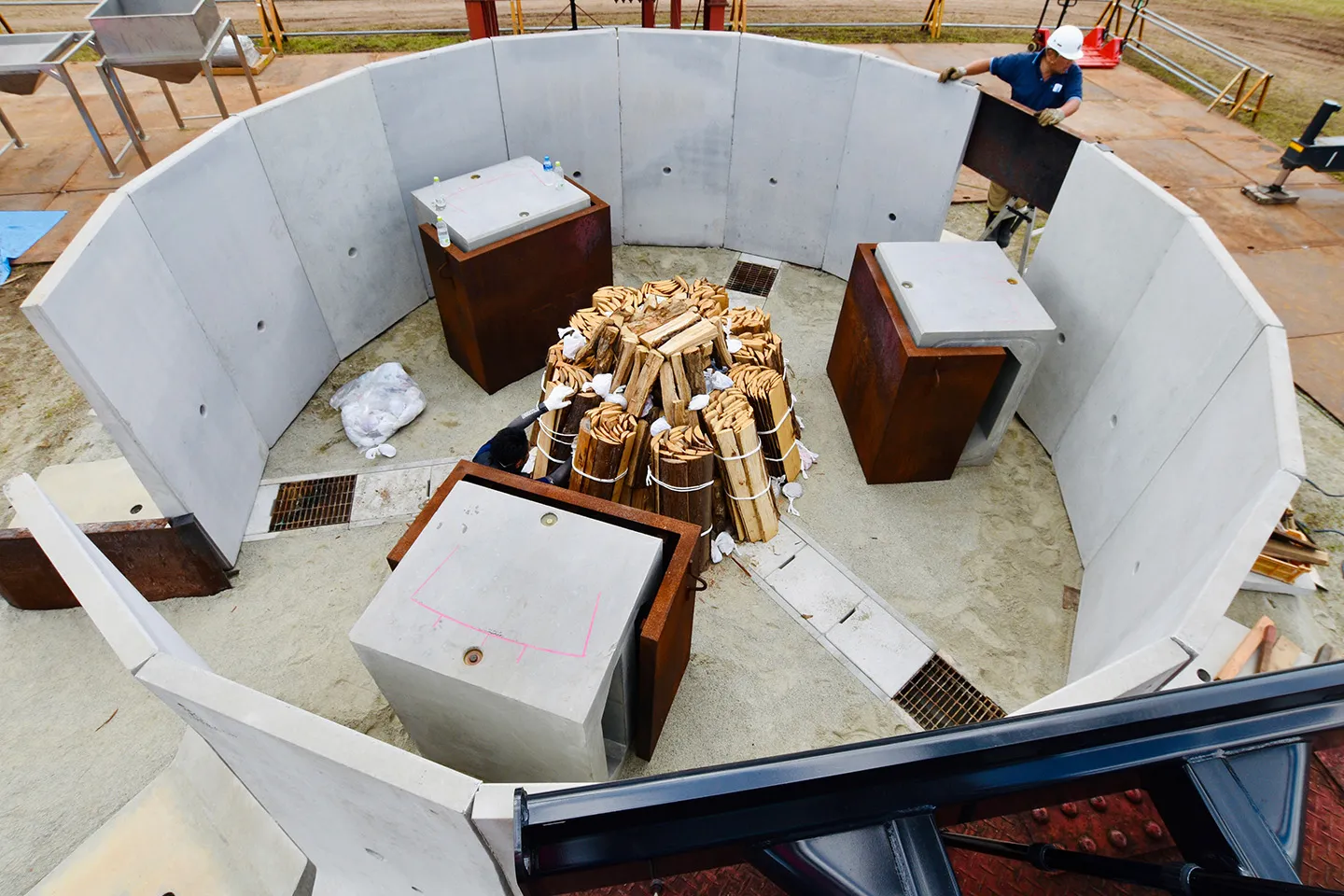
Massive Stove & Firewood
The pot is supported and heated by a massive stove constructed from large L-shaped concrete channels typically used in construction. Inside the stove, 6 tons of firewood are burned. Every element of the process is on an extraordinary scale.
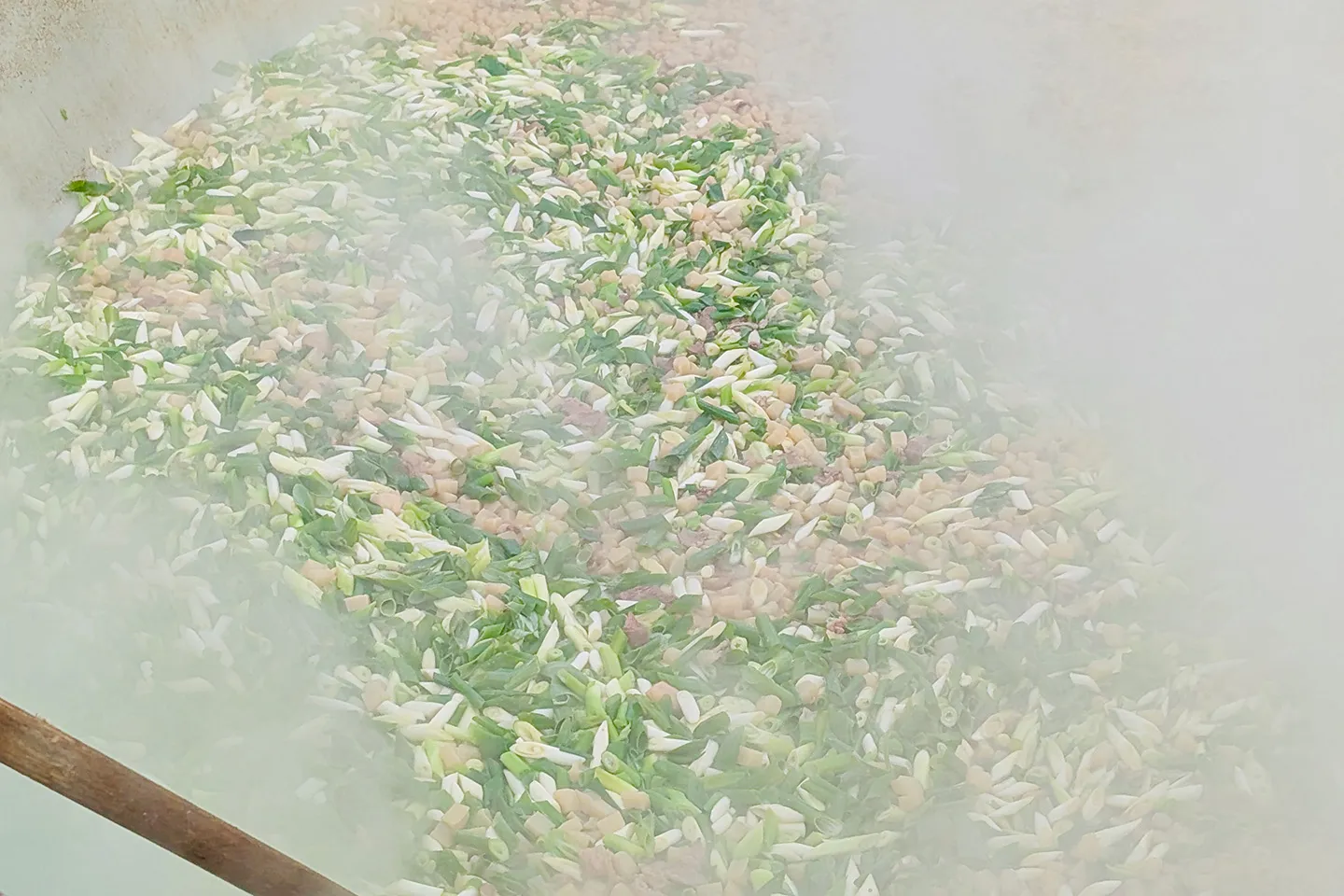
Adding Ingredients
Tons of Yamagata beef, taro potatoes, and green onions are ceremoniously added to the simmering soy sauce broth.
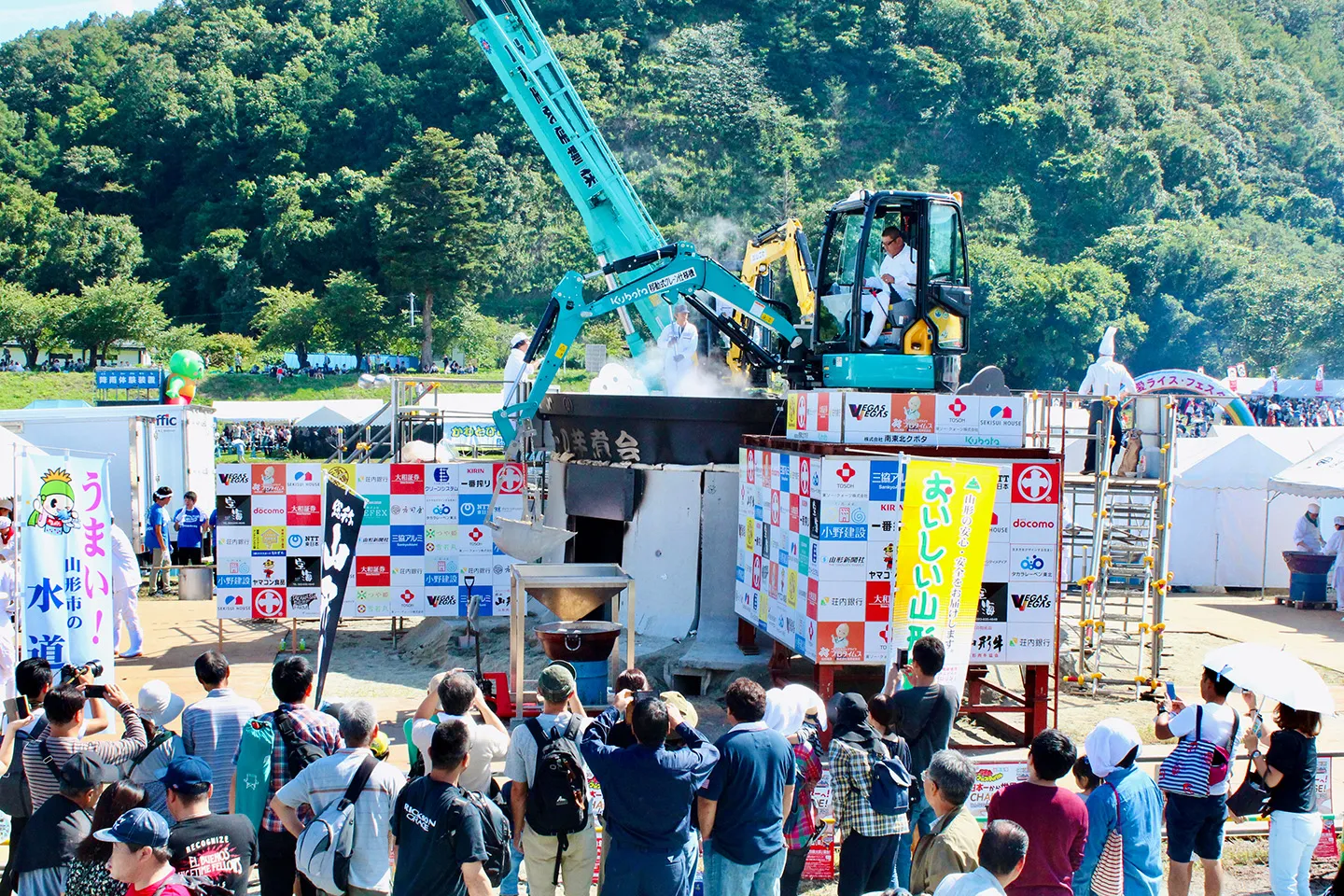
Dynamic Cooking
The sanitized backhoe springs into action, using its massive bucket to vigorously stir the incredible volume of stew.
Completion ✨
The ultimate Imoni is ready! The backhoe expertly scoops up to 100 servings at a time, distributing them to the crowd.
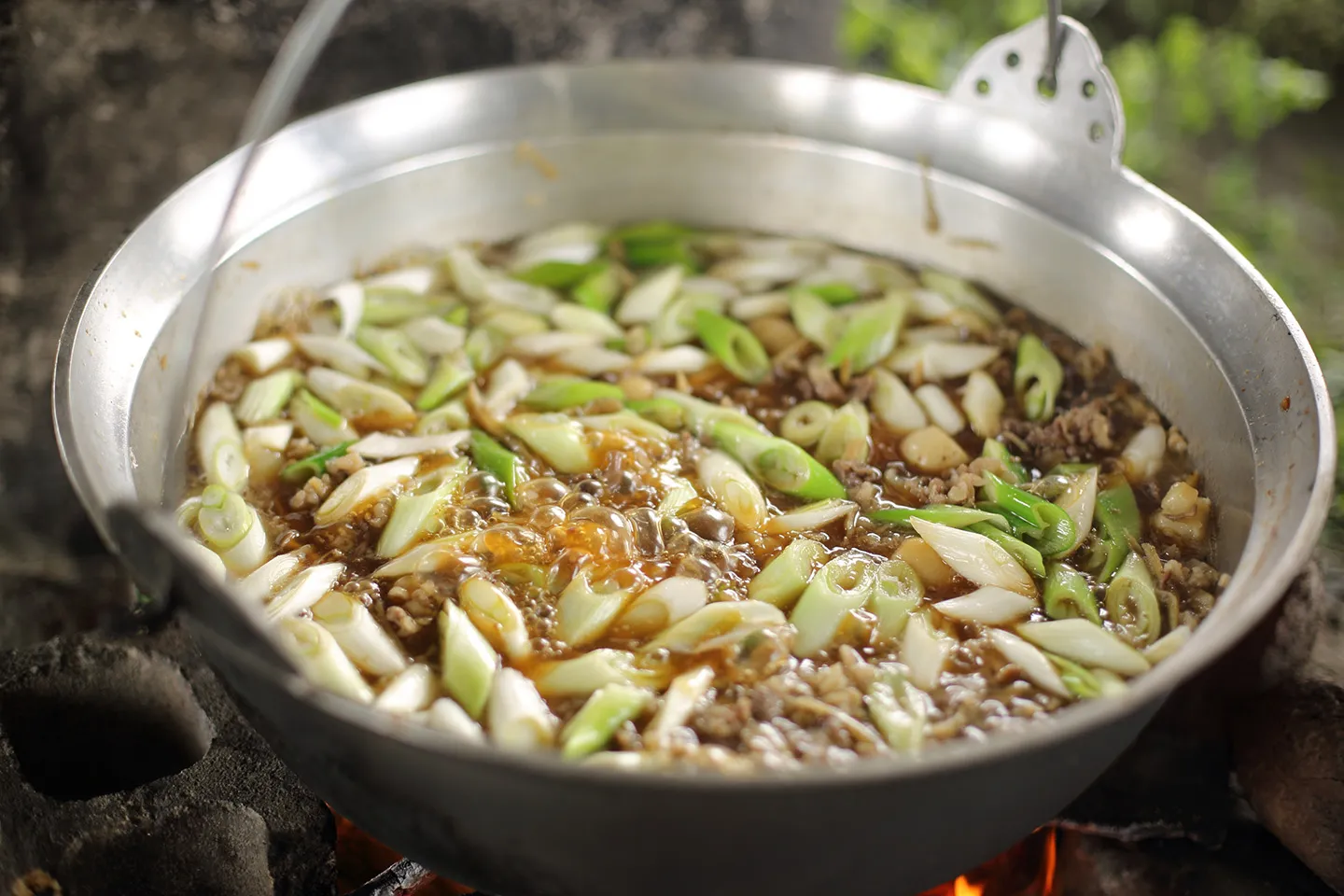
What Is “Imoni”?
Tohoku’s Proud Tradition
of “Japanese-Style BBQ”
You may be familiar with hanami, the cherry blossom viewing parties that celebrate spring in Japan. In the Tohoku region, there is an autumn tradition just as symbolic, imoni-kai. Imoni-kai is a long-standing seasonal custom enjoyed mainly in parts of Tohoku. Families and friends gather along riverbanks, build a fire, and cook a large pot of stew together. The scene feels very much like a Japanese-style barbecue.
Yamagata imoni features branded beef, taro potatoes, and green onions simmered in soy sauce and sugar, creating a simple yet deeply flavorful dish. Cooking pots, ground sheets, and even fire starters are available for free rental, making the tradition easy for anyone to enjoy.
Festival Participation
Basic Information & Premium Experiences
🎫 Standard Entry
Sponsorship Contribution
¥700 or more / per bowl
Advance Tickets (Recommended)
Purchase via “teket”. With an advance purchase, one bowl is ¥600.
Payment
Cash or advance
Distribution
8:30 AM onwards
Imoni Teahouse
At the reservation-only “Imoni Teahouse,” guests can enjoy unlimited servings of imoni in a special tent. The experience also includes the opportunity to watch the Yamagata Hanagasa Dance up close, offering a truly premium experience.
RESERVE PREMIUM SEAT
For seat reservations, please contact us by email.
Clicking the button will open your email app.
Don’t Make It Just a Day Trip!
After the festival, be sure to stay in Yamagata and fully experience everything the region has to offer.
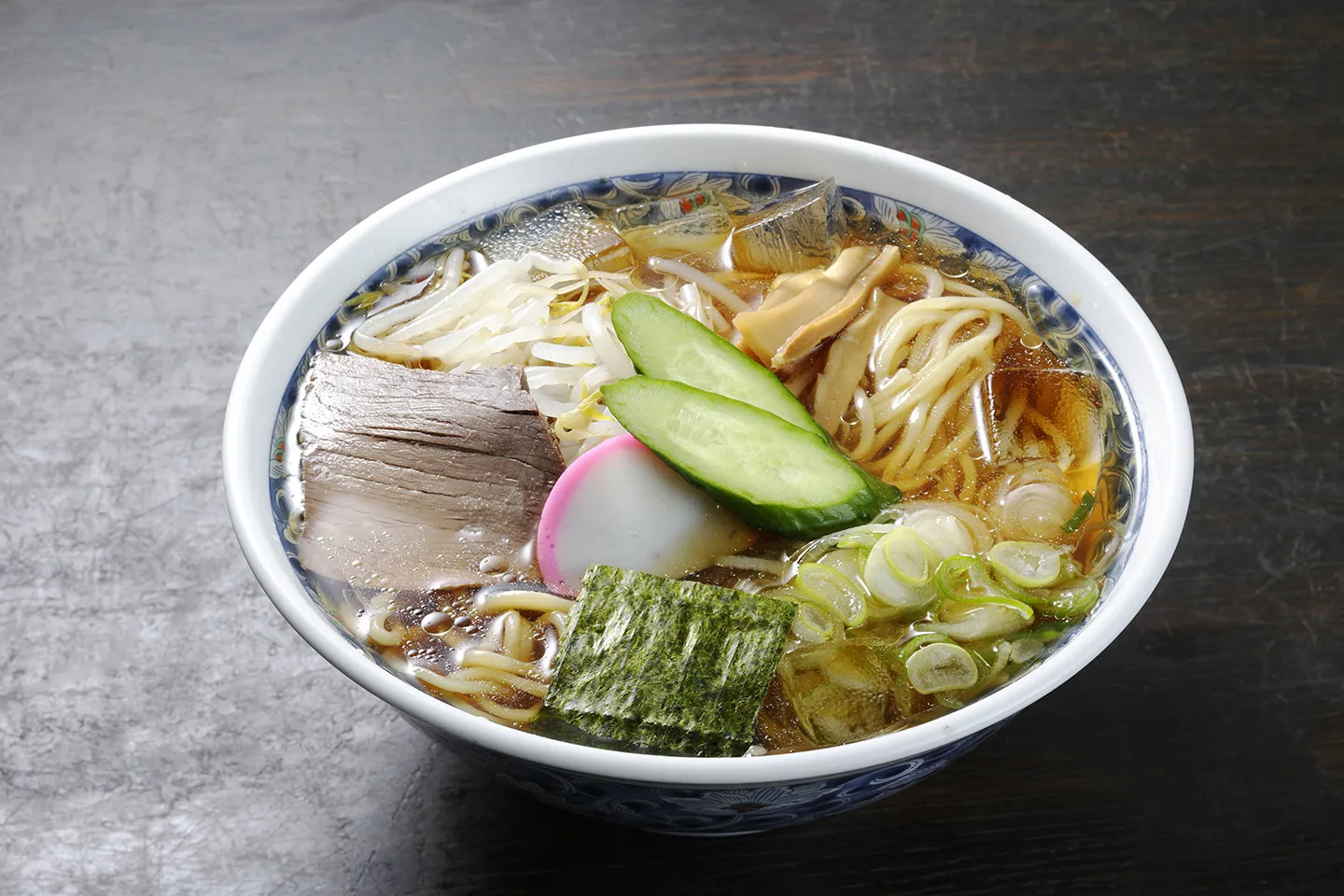
Gourmet Destination
Yamagata boasts the highest ramen consumption in Japan.
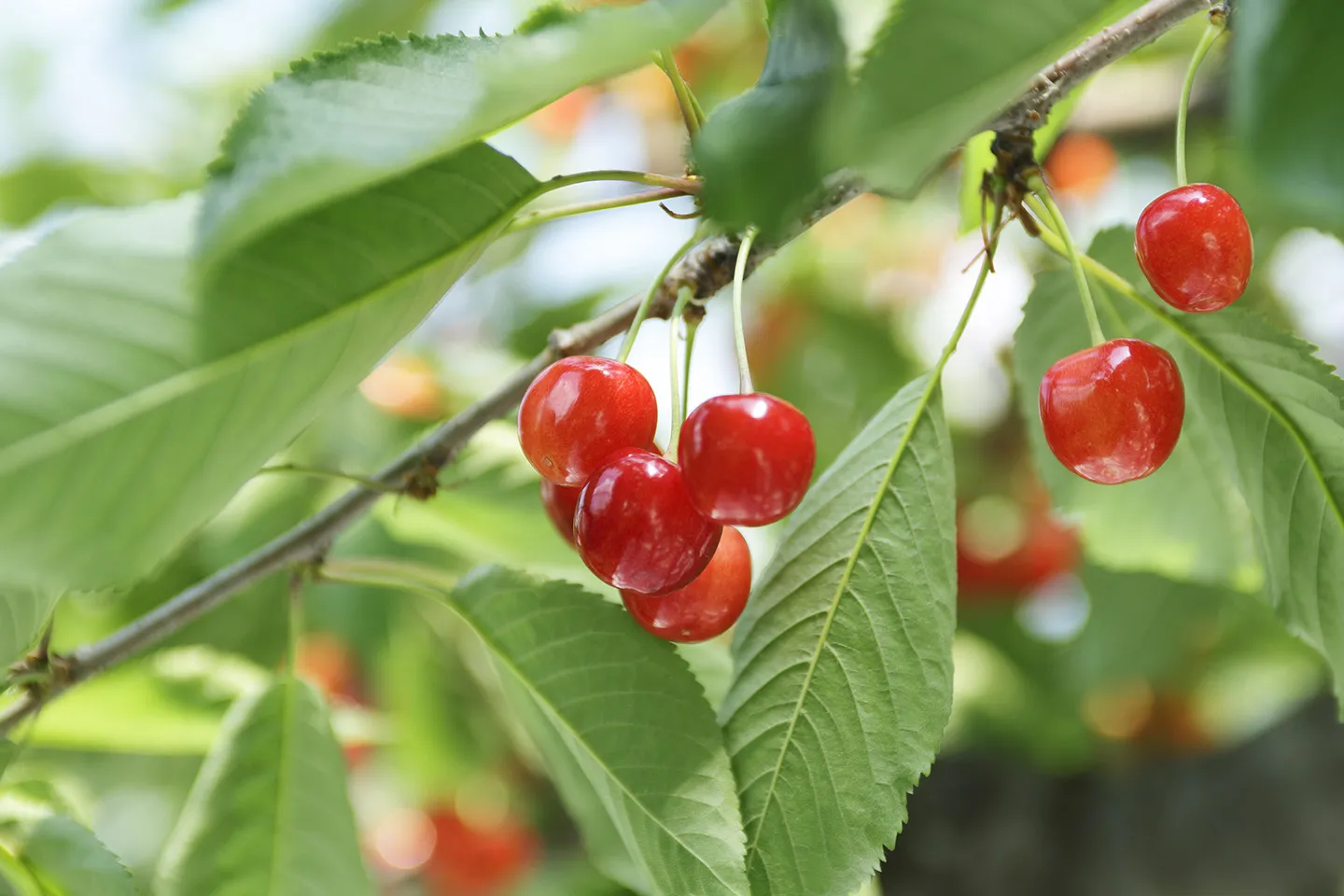
Sato Nishiki: Cherries
Yamagata produces 70% of Japan’s cherries. Best enjoyed in early summer (June-July) for their sweet and tart juiciness.
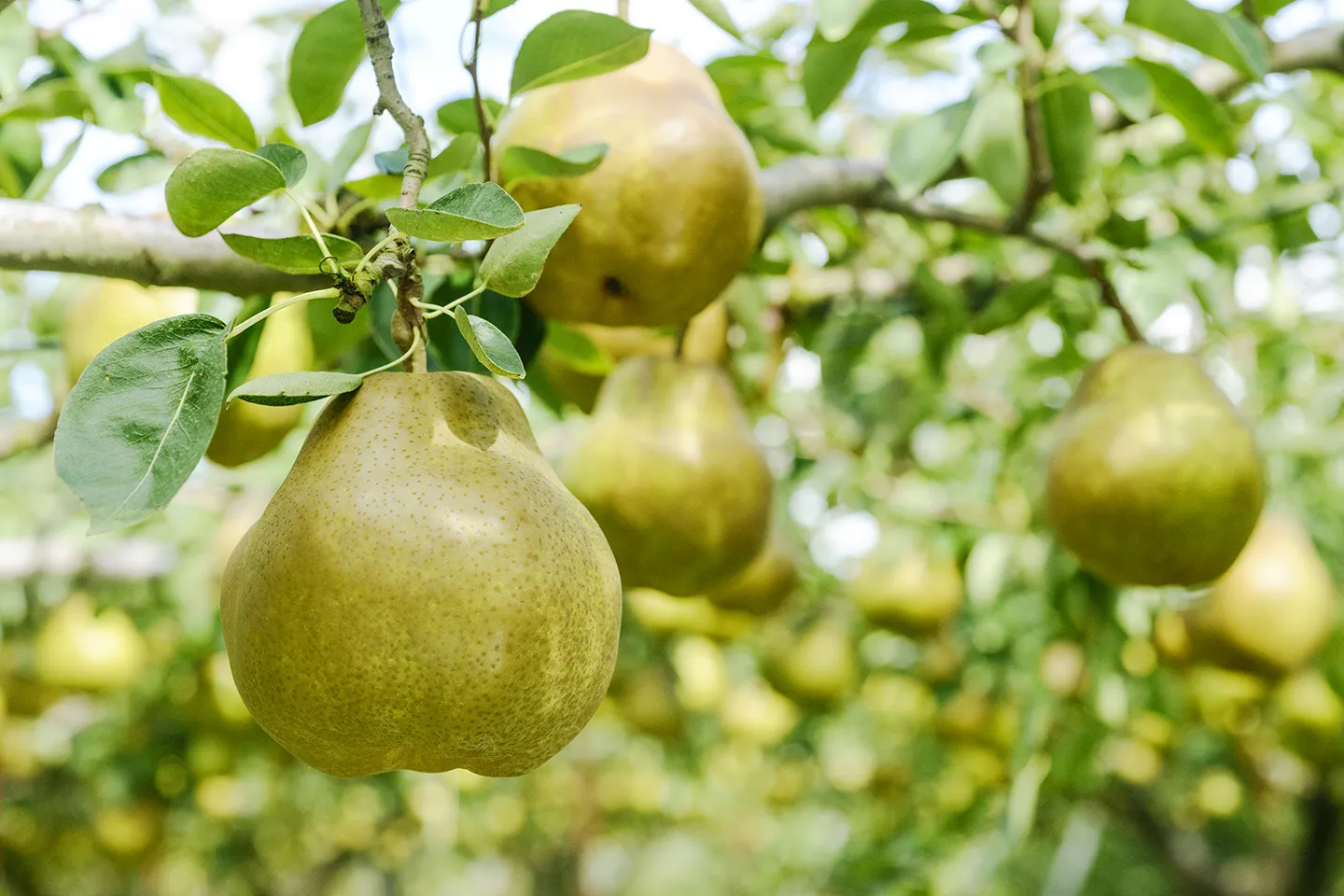
La France Pears
Yamagata yields 80% of Japan’s production. Harvested in autumn (Oct-Dec), they are celebrated for their rich aroma and melting texture.
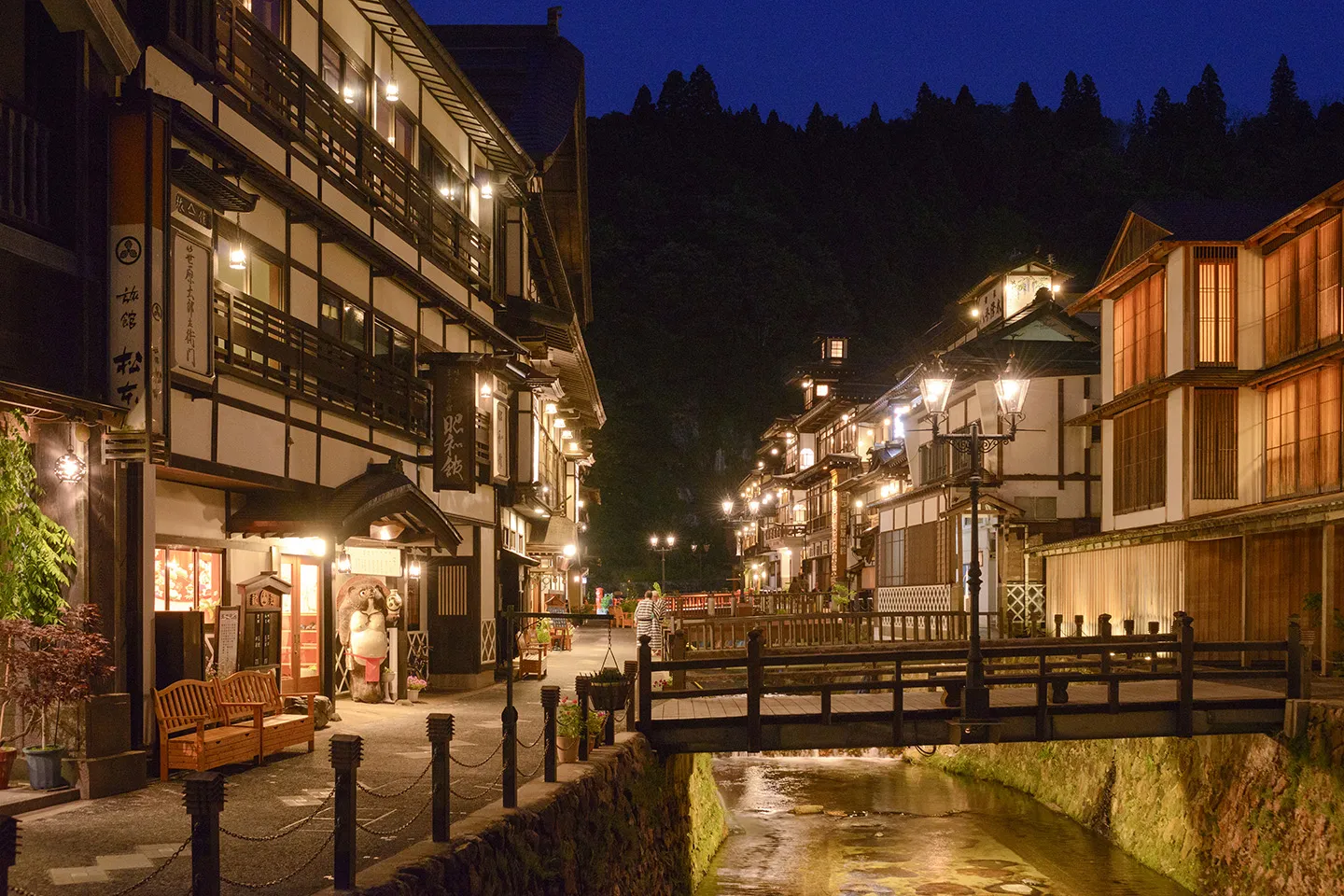
Ginzan Onsen
A photogenic hot spring town with nostalgic Taisho era atmosphere.
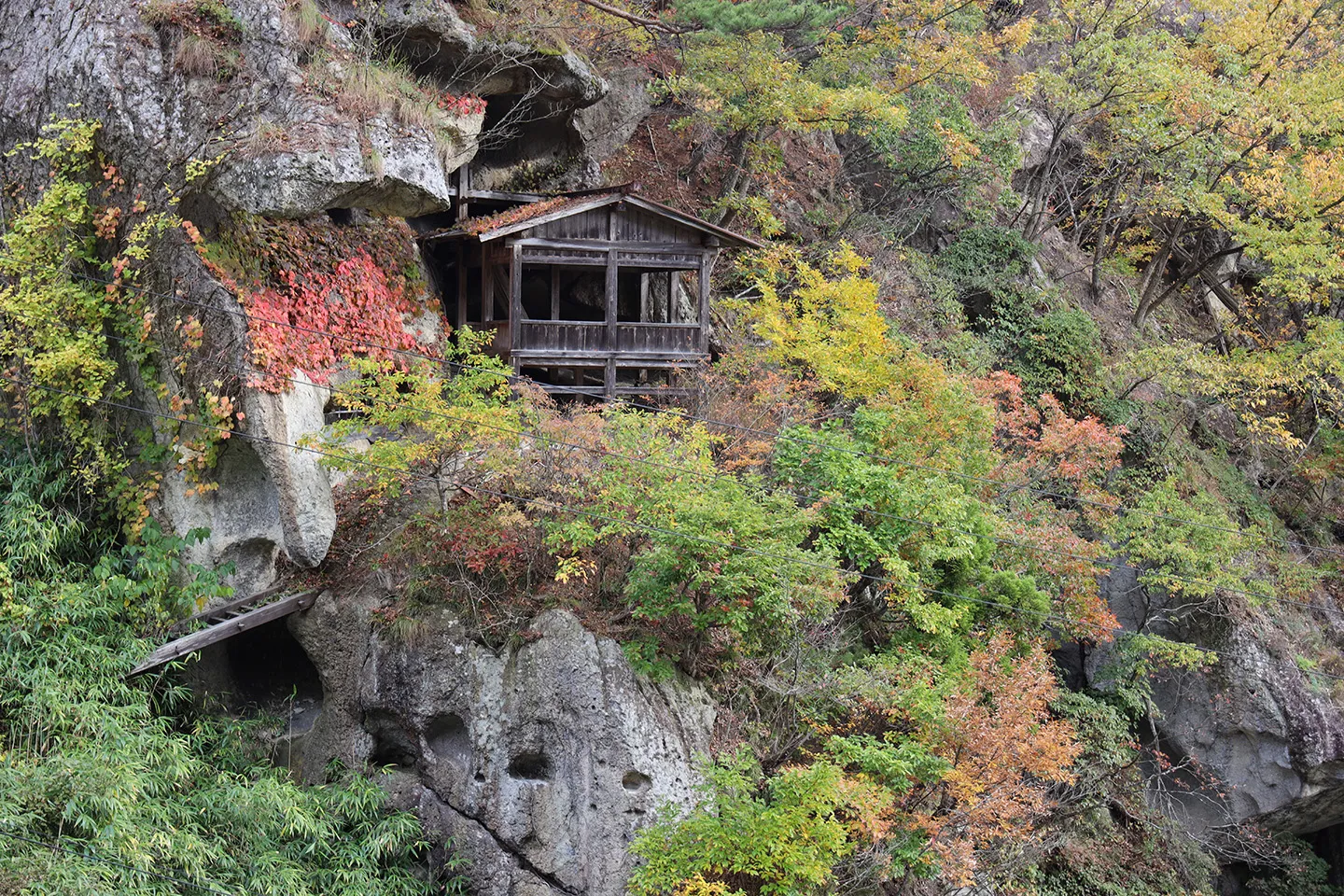
Yamadera Temple
A scenic mountain temple offering breathtaking views after 1,000 steps.
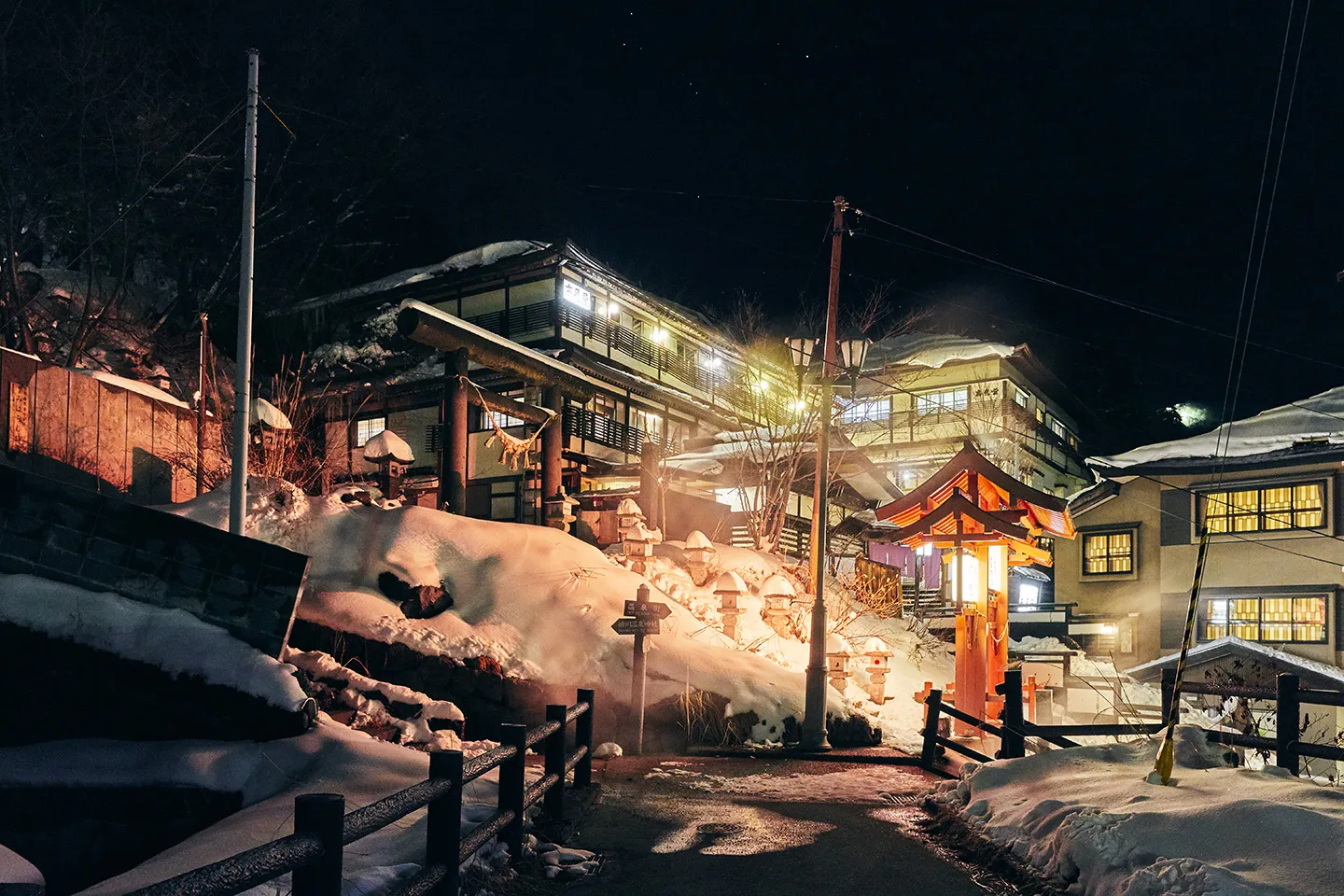
Zao Onsen
Experience one of Japan’s most highly acidic hot springs, renowned for its rejuvenating and skin-beautifying properties.
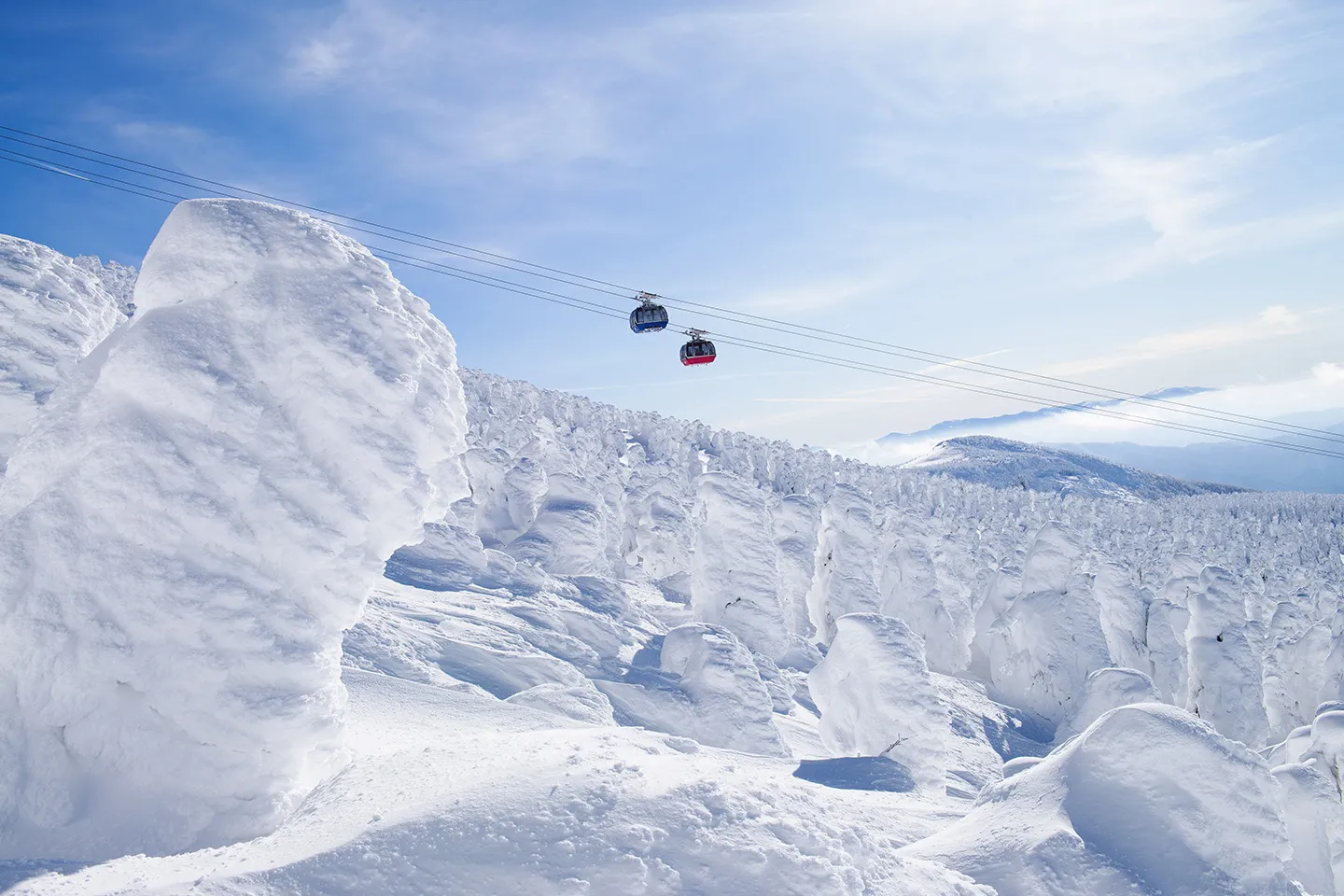
Snow Monsters
Marvel at the otherworldly “Snow Monsters”—magnificent frost-covered trees that create a spectacular winter landscape.
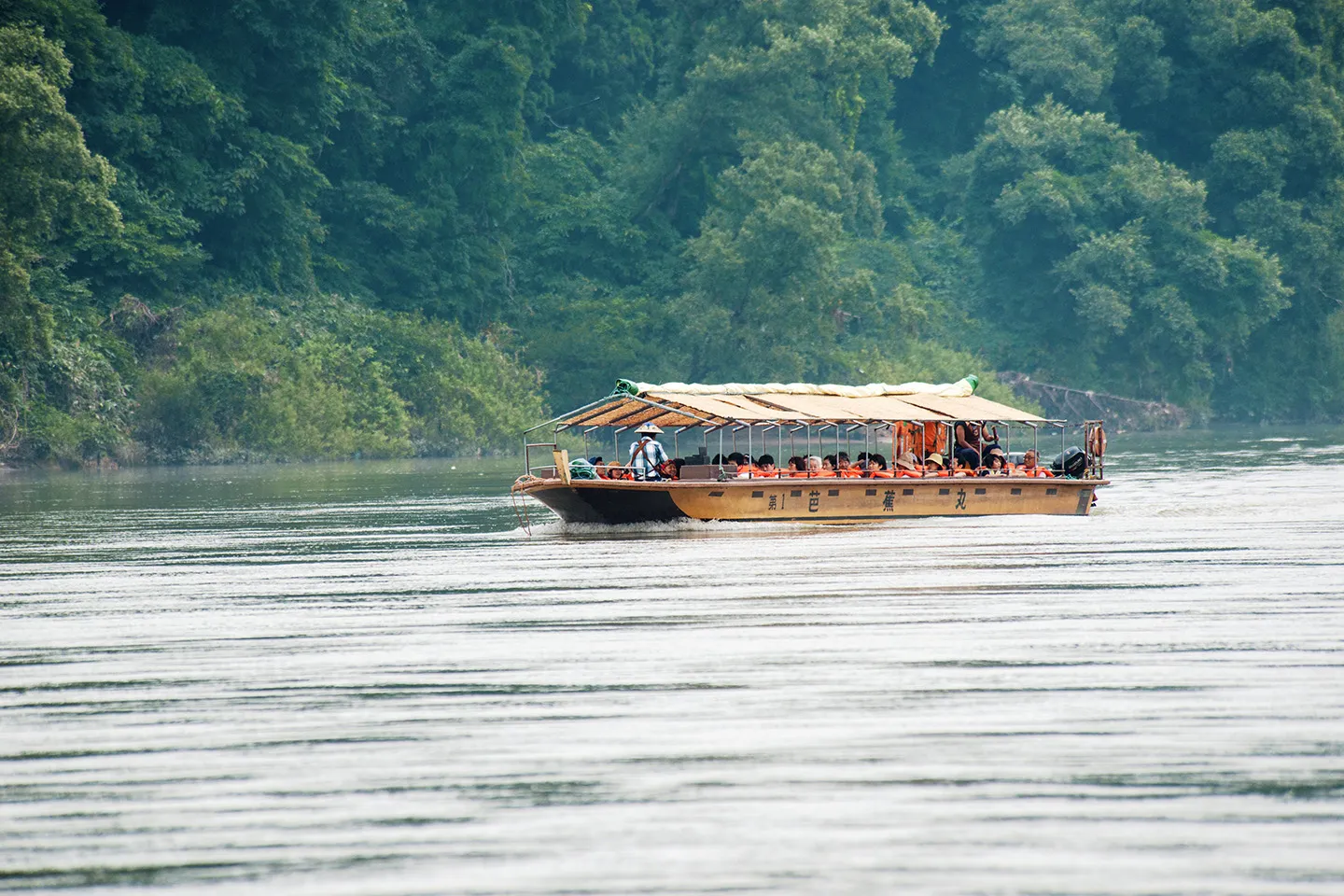
Mogami River
Enjoy a traditional boat ride down one of Japan’s most rapid rivers.
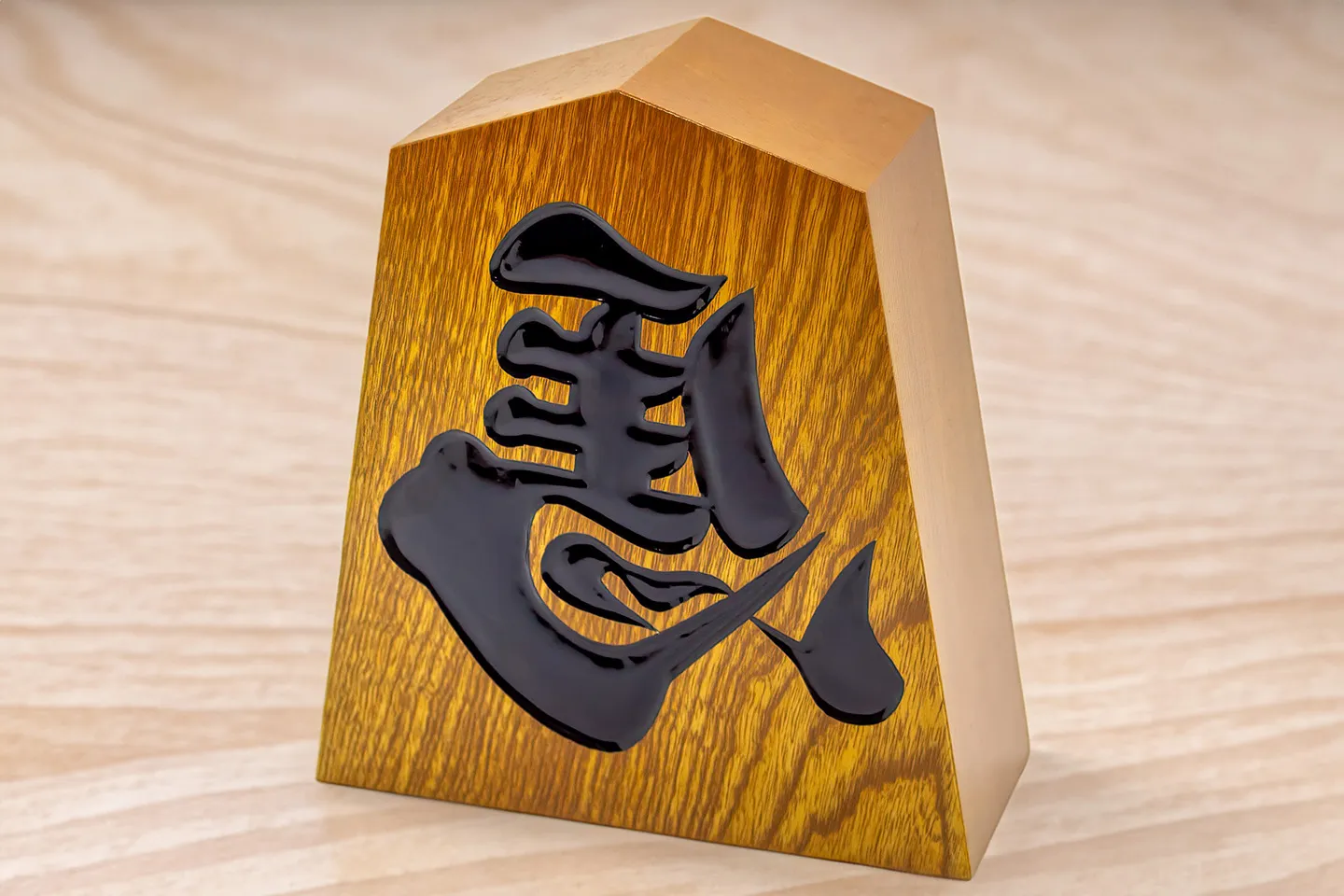
Shogi Pieces
Yamagata produces a staggering 95% of Japan’s shogi (Japanese chess) pieces.
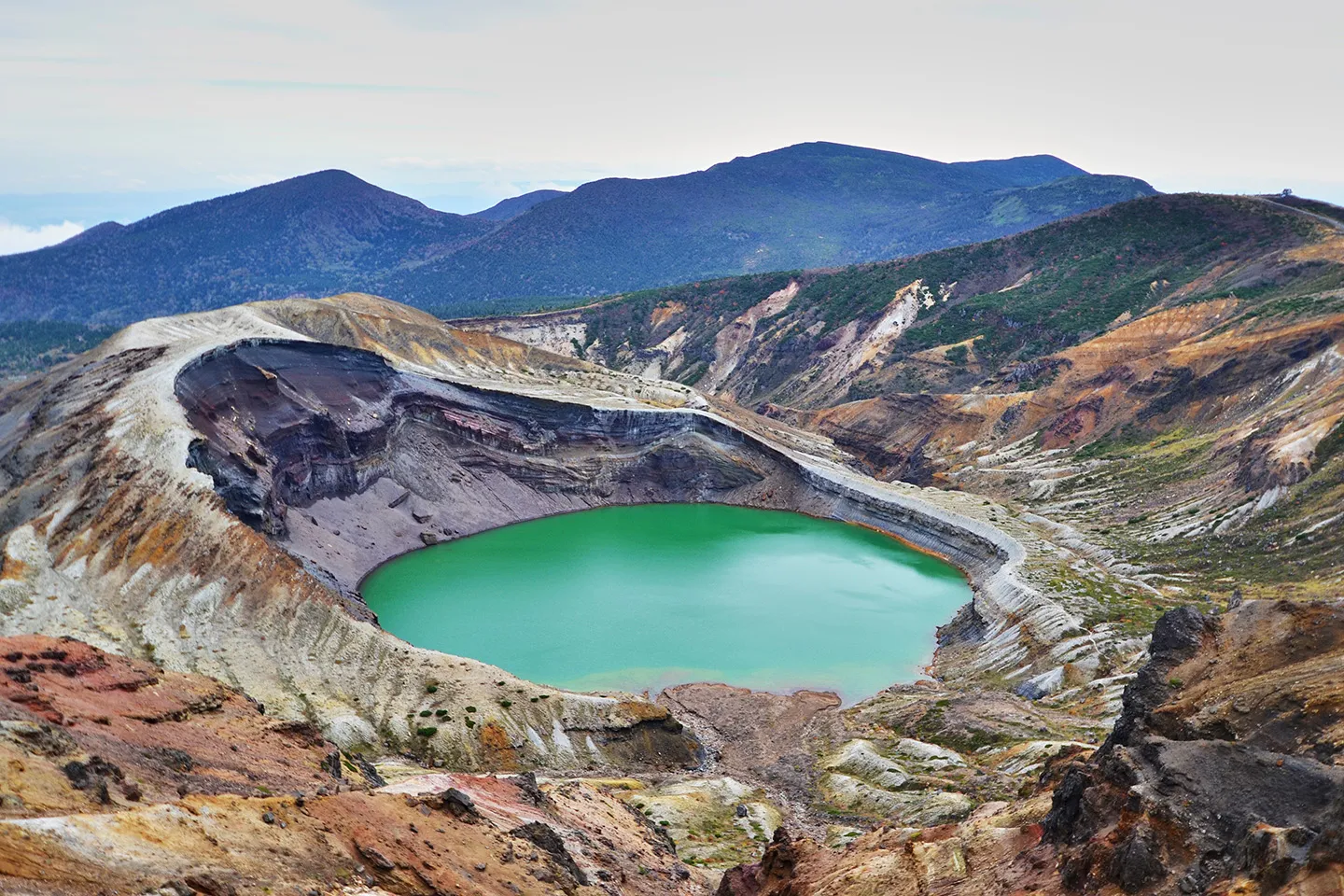
Okama Crater
A stunning volcanic crater lake in Zao, famous for its mesmerizing emerald green water that changes color with the sunlight.
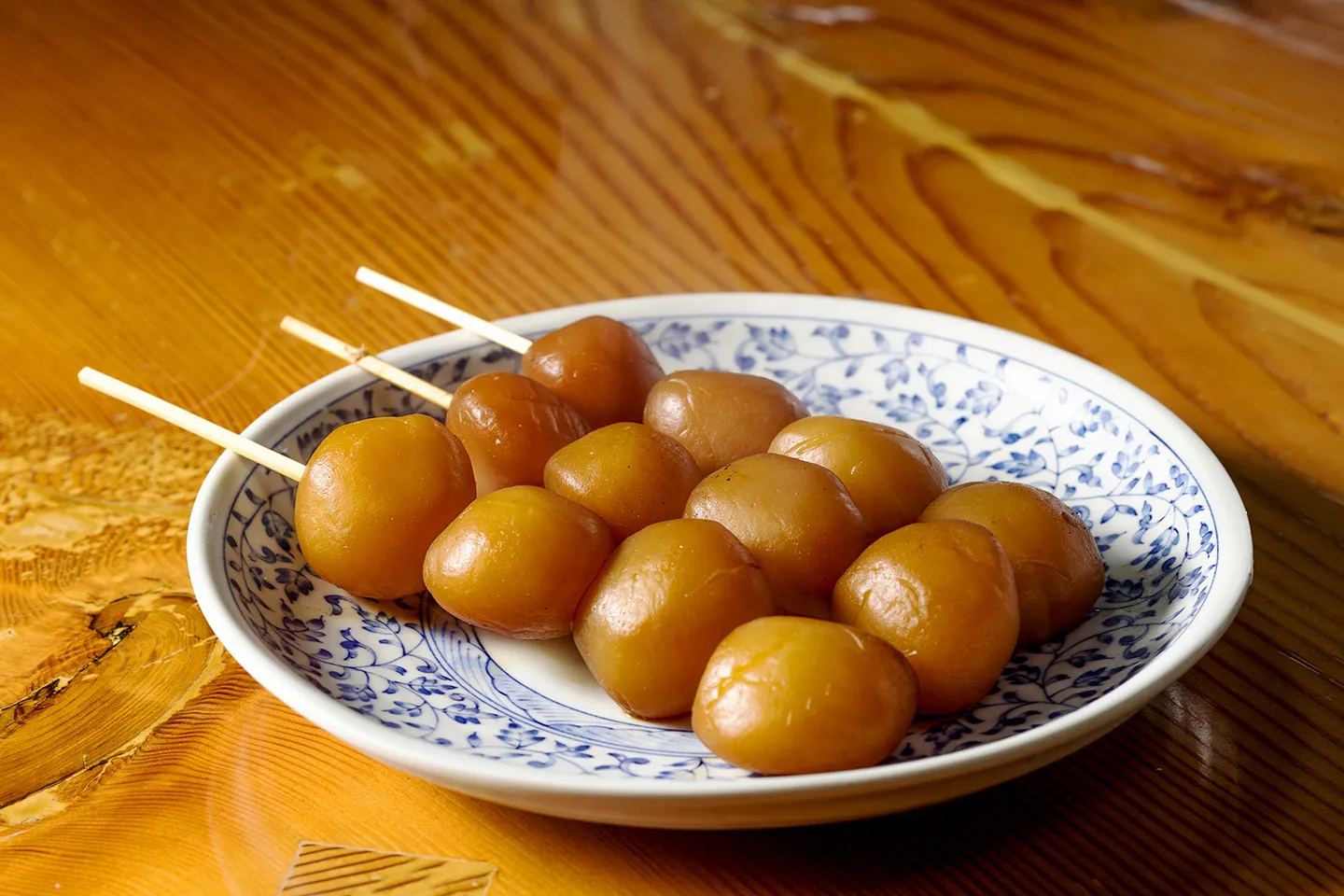
Tama Konnyaku
A quintessential Yamagata street food. These piping hot, soy sauce-simmered konjac balls are a deeply satisfying local favorite.
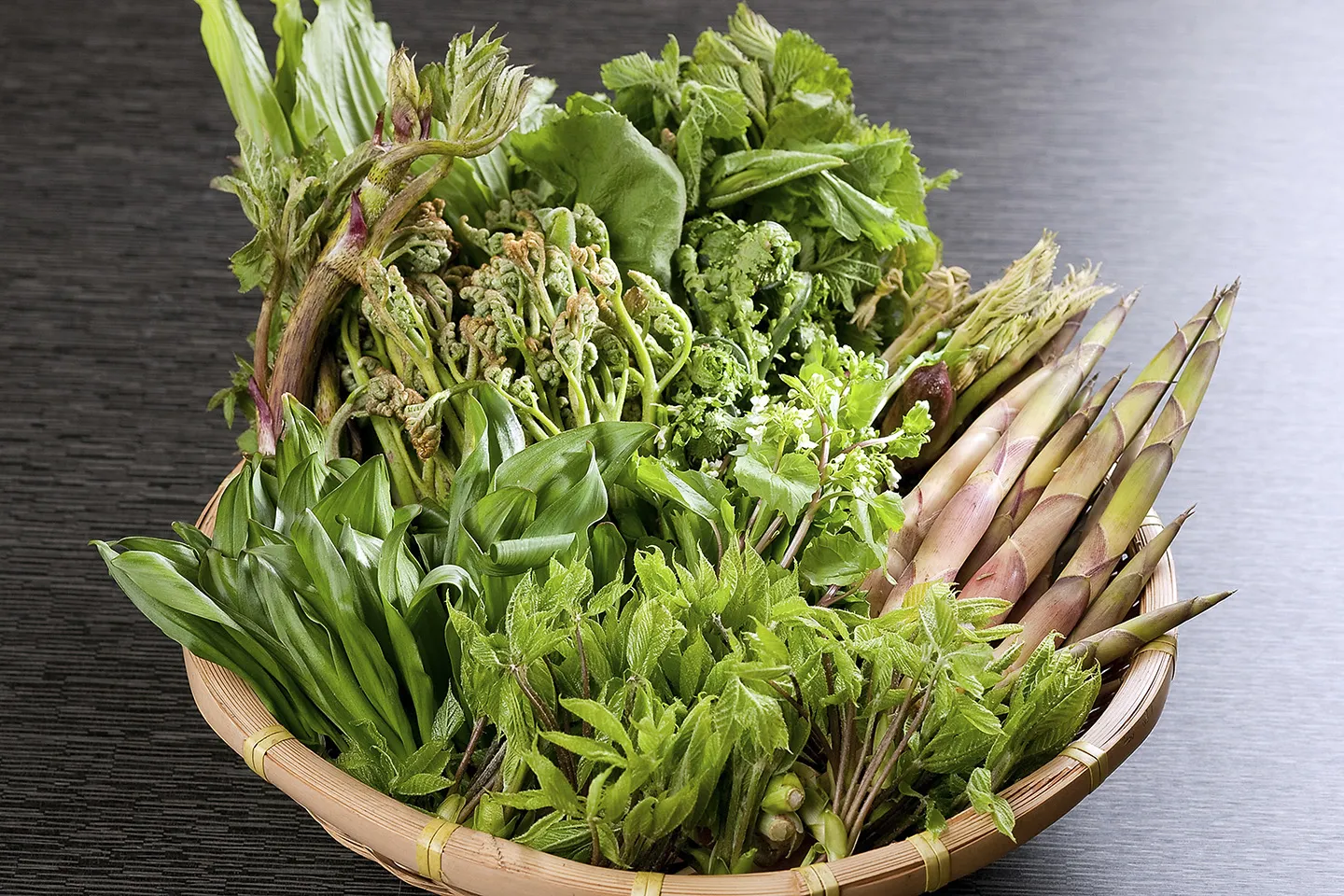
Mountain Vegetables
Experience the distinct flavors of the seasons with fresh “sansai” (mountain vegetables) harvested from Yamagata’s rich natural landscapes.
Access
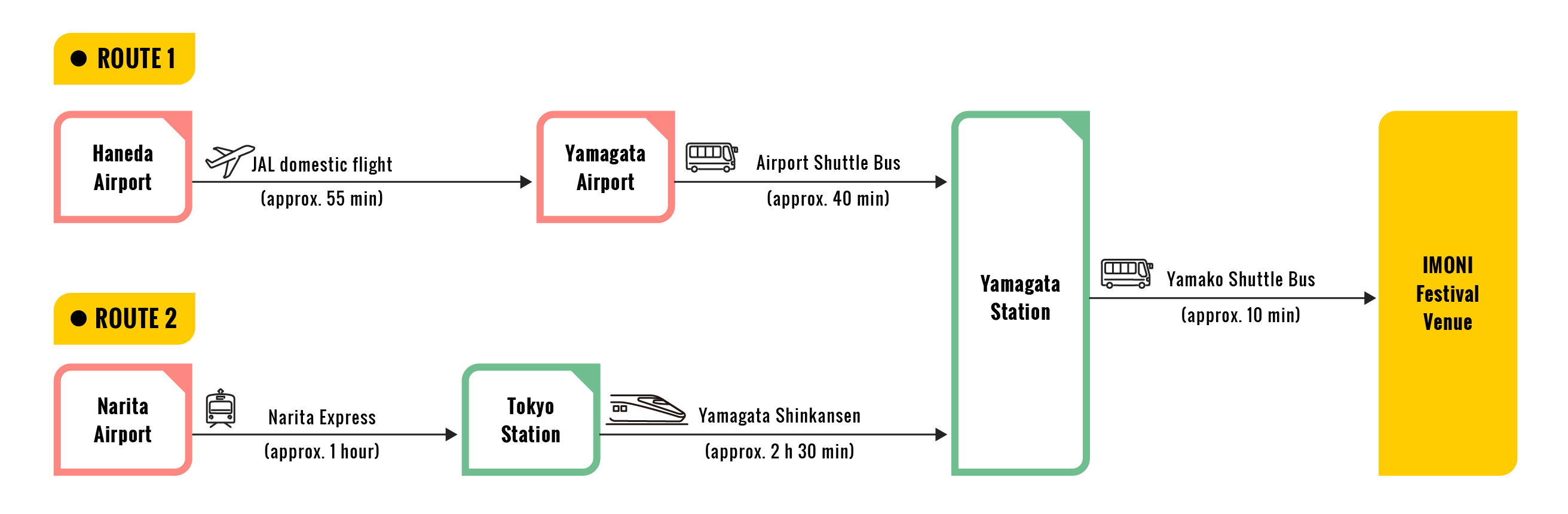
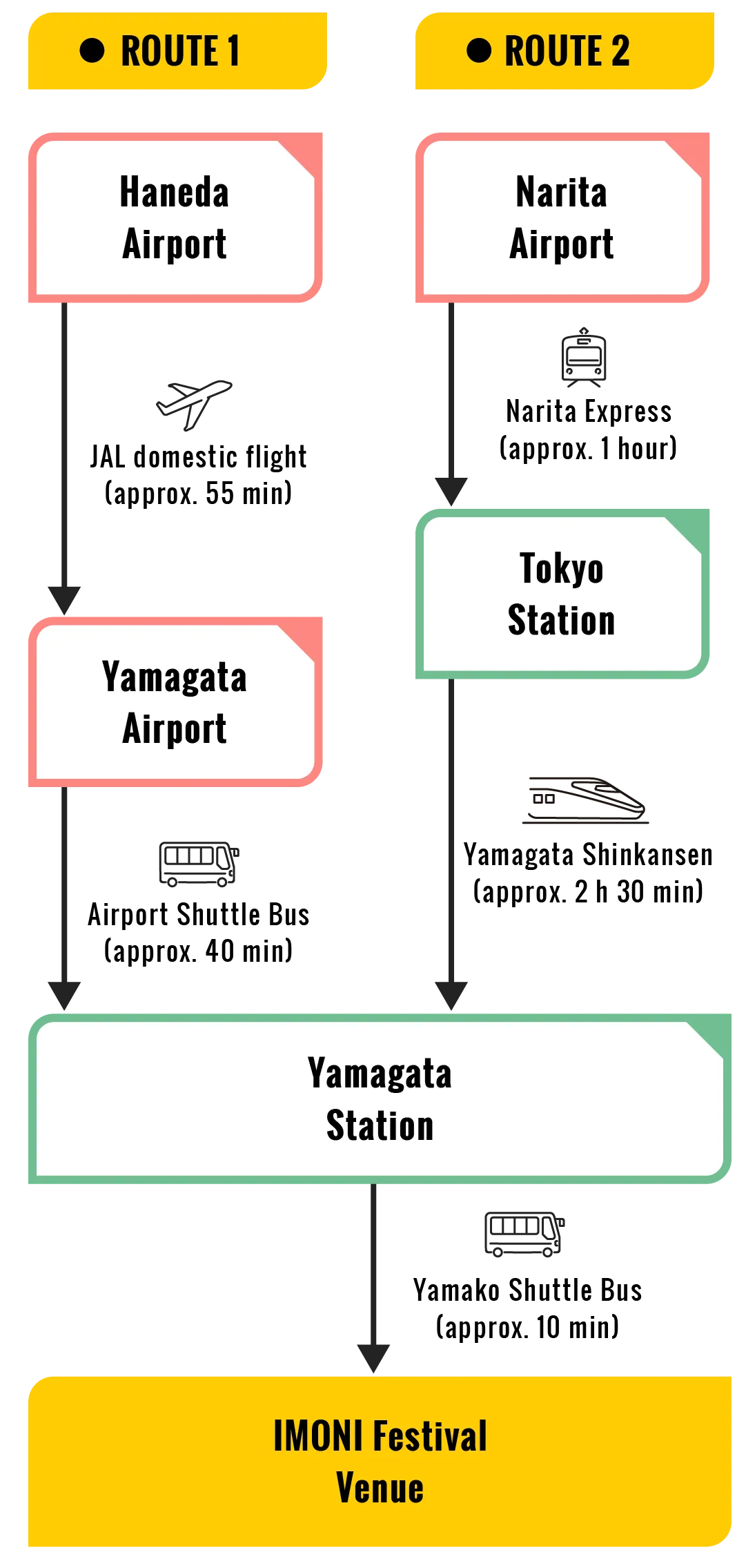
2.5 hours from Tokyo
via the Yamagata Shinkansen.
A shuttle bus also operates from Yamagata Station.
Recommended Routes
Map
Important Notes at the Venue
- Access to the venue is by foot or shuttle bus only. Entry by car or motorcycle is not permitted.
- There is no parking available near the venue. Please refrain from parking on roads near the venue, as it obstructs traffic.
- For visitor safety, the use of drones or other unmanned aerial vehicles near the venue is prohibited.